 Let's Talk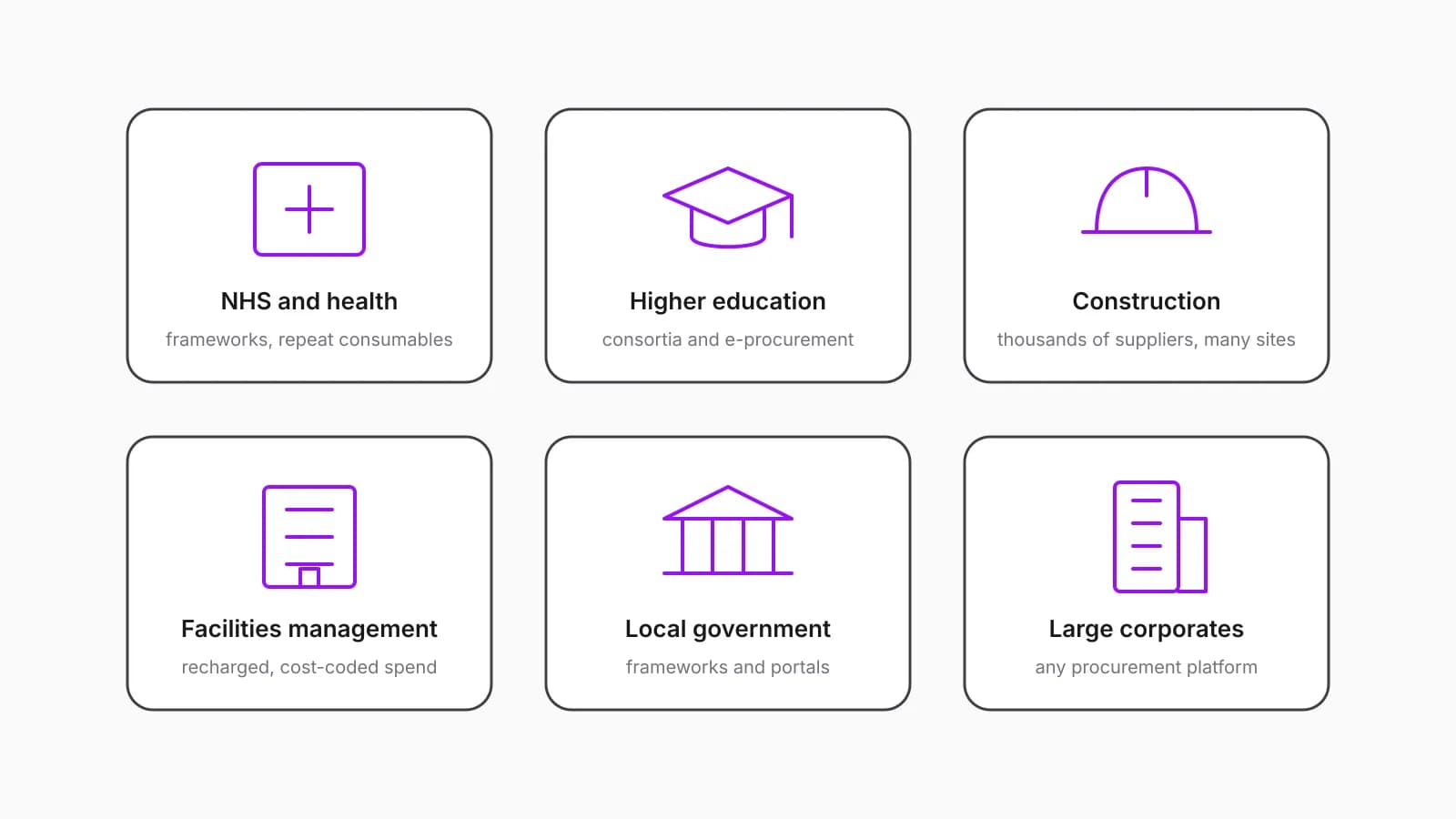
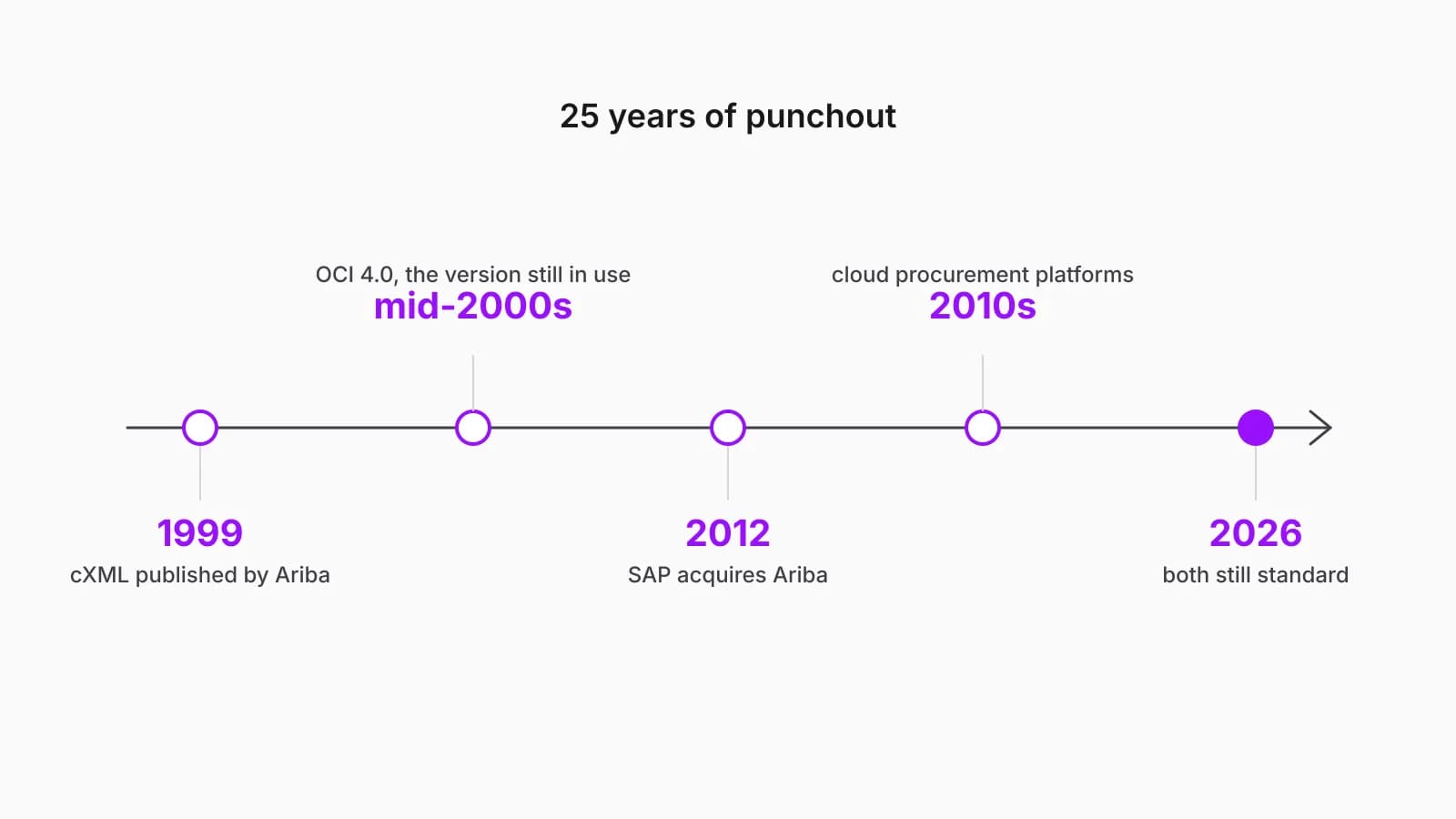
Punchout is the connection that lets a large customer's staff shop on your website from inside their own procurement system, and send the basket back there for approval. A few years ago it was something a handful of very large suppliers were asked for. Today it is increasingly a line in the tender, or a box on the supplier onboarding form, across a recognisable set of UK sectors.
This article is for suppliers trying to work out whether the question is likely to come their way. It goes sector by sector, with the reason each one cares, at the level of what is publicly known. If your customers look like the organisations below, expect to be asked.
NHS and the wider health sector
Health procurement in England and Wales is centralised through NHS Supply Chain for a large part of the product range, and trusts also run their own purchasing for much of the rest. Both routes are built on catalogues and frameworks: a supplier's products are normally visible to buyers only after a successful bid, with order codes and agreed prices. NHS Supply Chain has been rolling out a new online catalogue to its customers since late 2025, which gives a sense of how much of the buying runs through catalogue systems rather than supplier websites.
Trusts and health bodies also have strict audit requirements and a very high volume of repeat consumable orders. That combination, controlled catalogues plus repeat purchasing, is exactly where punchout tends to be requested, usually as part of a wider ask about electronic ordering and invoicing.
Higher education
Universities buy through shared procurement consortia and their own e-procurement platforms, and several have publicly described punchout programmes going back more than a decade, with office supplies and laboratory consumables among the first categories connected. Platforms vary: Jaggaer and Unimarket both have a higher-education focus, and some universities run punchout from Oracle procurement. Whichever platform is in place, the pattern is the same. Approved suppliers appear inside the system with contract pricing, and staff requisition from there.
For a supplier, that means a tender win with a university is often followed by a request to be connected, and the request will come with a platform name attached.
Construction and infrastructure
Large contractors buy from thousands of suppliers across hundreds of sites, and they have spent the last decade bringing that spend under control through procurement platforms. Coupa and SAP Ariba are both common in this sector. Punchout is how a contractor keeps materials, consumables, PPE and sub-contractor purchasing inside its approval and cost-coding controls while still letting site teams order from a proper catalogue.
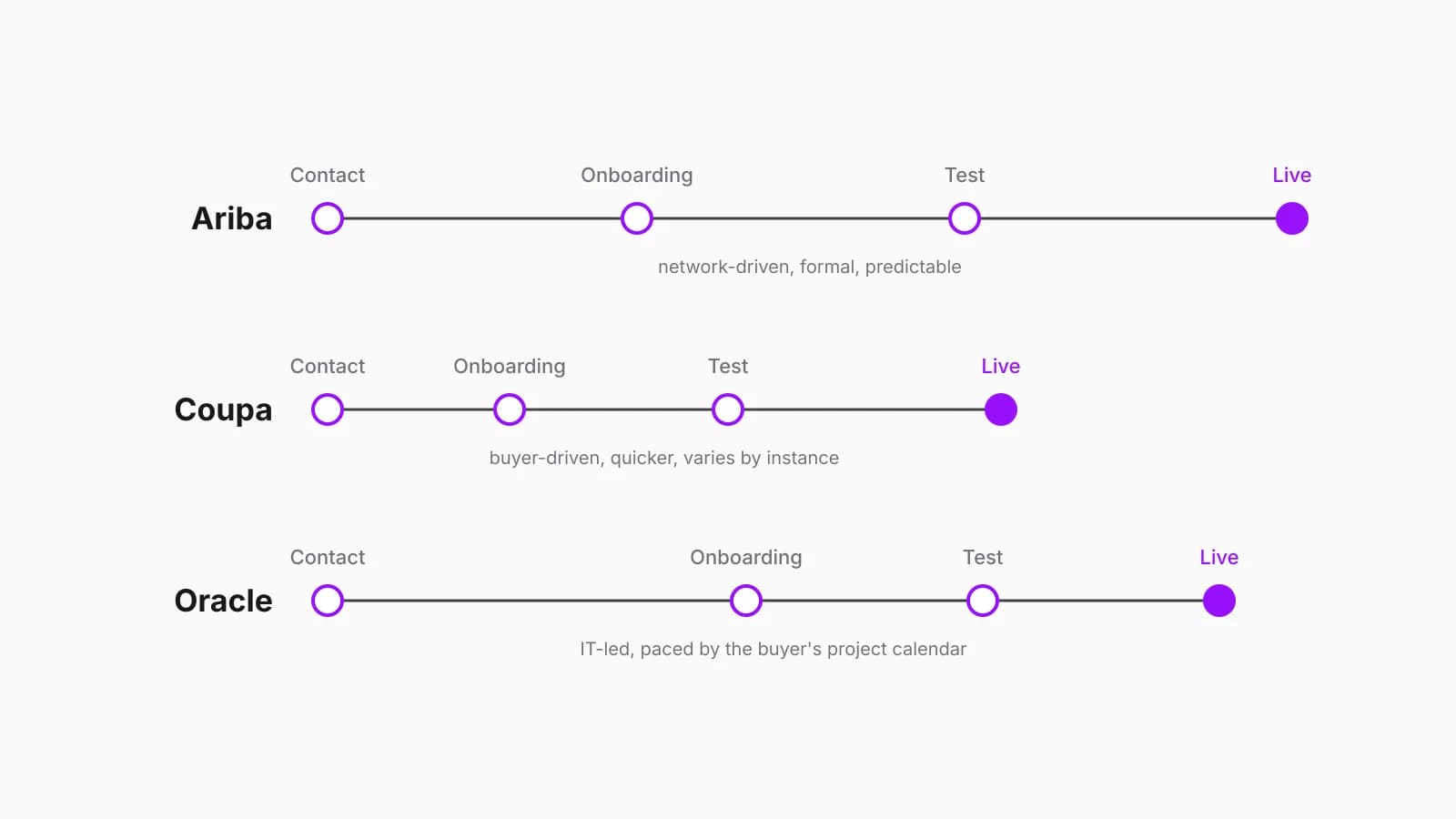
If you supply the construction sector and have won a place on a contractor's approved list, punchout is often the next conversation. We cover how the main platforms differ from a supplier's point of view in Ariba, Coupa and Oracle: how the punchout experience differs.
Facilities management and services
Facilities management providers run large, distributed workforces buying consumables, cleaning supplies, PPE, parts and equipment across many client sites, often with the cost recharged to the client. That makes cost-centre accuracy and approval control a commercial necessity rather than an administrative preference, and it is why punchout appears so often in FM supplier onboarding. The volume is high, the basket values are modest, and the buyer wants every order to carry the right codes without anyone re-keying them.
Local government and the wider public sector
Councils and public bodies buy through frameworks and shared purchasing arrangements, and a growing number run their purchasing through platforms such as Proactis, which is available to local authorities through the UK Government's G-Cloud framework and whose marketplace product includes punchout access to supplier catalogues. Several councils have publicly described moving the large majority of their purchasing through such platforms.
For suppliers, the public-sector pattern is that the requirement appears in the tender documents or the supplier portal rather than in a conversation, which makes it easy to miss until the contract is signed.
Large corporates generally
Beyond the named sectors, any organisation with a procurement function large enough to own a platform is a candidate. Manufacturers, utilities, retailers buying goods not for resale, financial services firms and professional services groups all run procurement systems, and once a system is in place the pull towards connecting suppliers to it is strong. If a customer has a procurement department with its own software, assume punchout is on their list.
The pattern across all of them
Every sector above shares three characteristics:
- High transaction volume. Many orders, often of modest value, from many people.
- Approval controls. Purchases have to be authorised, coded and recorded before they happen.
- Multiple sites or departments. Buying is distributed, but it has to be reported centrally.
If your customers look like that, the question is a matter of when rather than whether. The useful preparation is to understand what punchout is at a commercial level, which we cover in What is punchout? A guide for sales directors, and to know who you would turn to for the punchout integration itself when the request arrives.
Been asked for punchout in a tender or onboarding form?
Takeoff Digital connects Magento and Shopify stores to Ariba, Coupa, Oracle and other procurement platforms, and has done it for suppliers across construction, facilities and the public sector. If a customer has just asked you the question, talk to us and we will tell you what it involves for your business.