 Let's Talk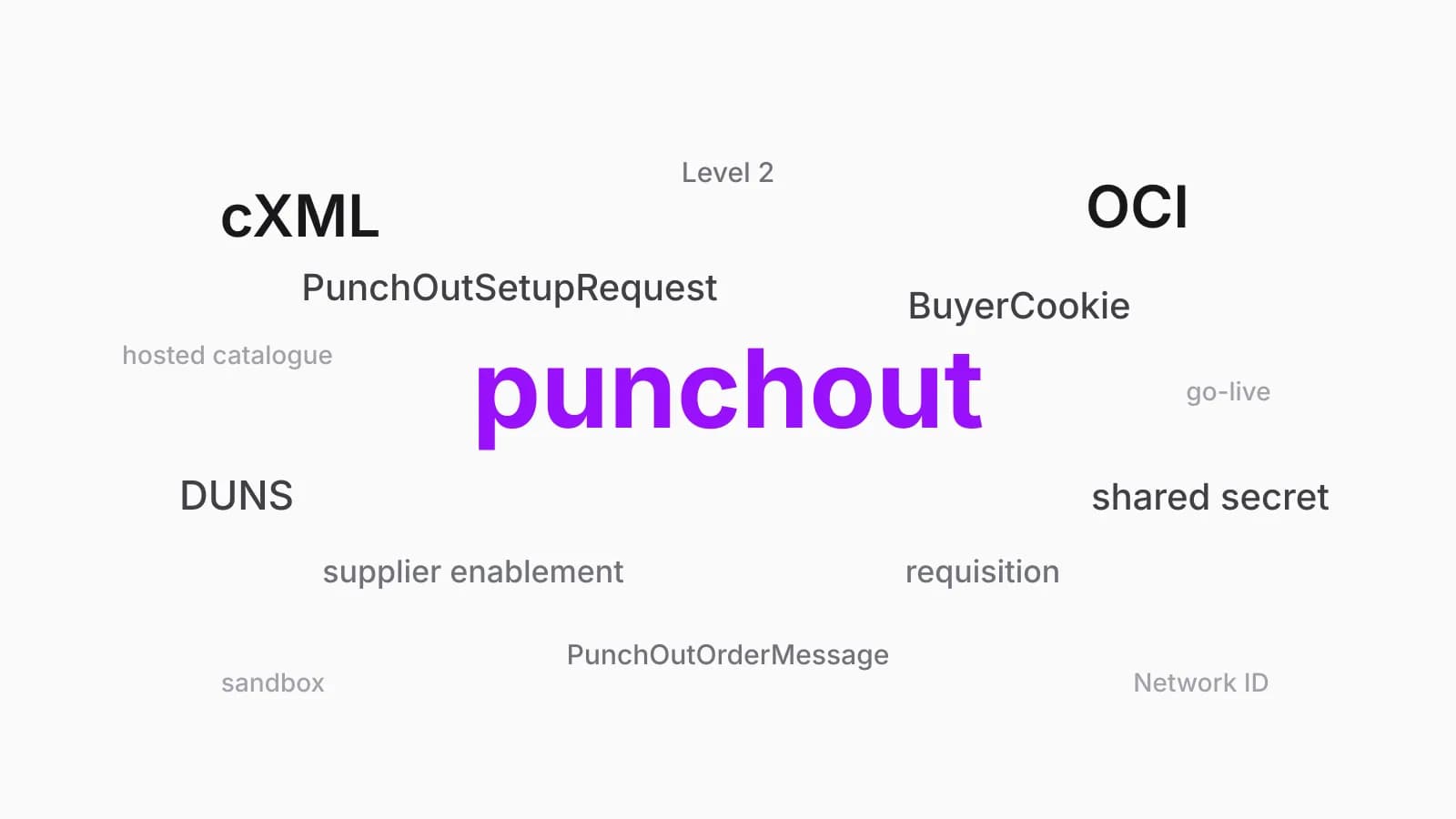
Once a large customer asks for punchout, the emails start arriving, and they are full of words nobody in your sales team has seen before. Punchout itself is the connection that lets the customer's staff shop on your website from inside their procurement system and send the basket back there for approval. The rest of the vocabulary comes from the platforms and the people who run them.
This glossary explains what each term refers to, in one or two sentences, so you can follow the conversation. It deliberately stops short of how anything works. That is your integration partner's territory, and you do not need it to hold your end of the discussion. Terms are in alphabetical order.
A to D
BuyerCookie — an identifier the buyer's system attaches to a punchout session so that it can match the returned basket to the person who started shopping.
Catalogue (hosted vs punchout) — a hosted catalogue is a file of your products and prices that the buyer loads into their own system. A punchout catalogue is live on your website and reached from inside their system. Many buyers use both, for different suppliers.
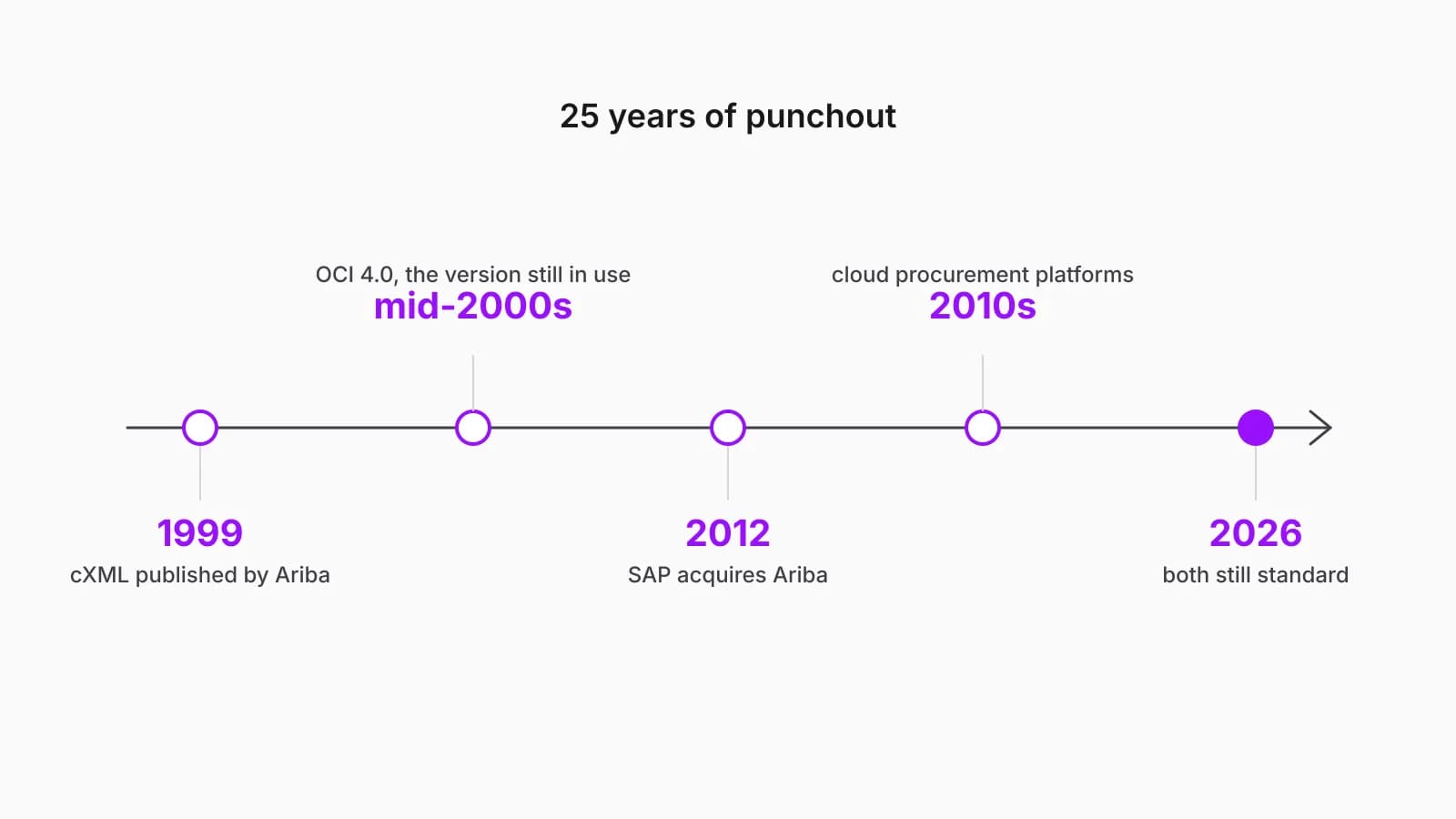
cXML — commerce XML, the open punchout standard originally published by Ariba in 1999 and used by most of the major procurement networks. See cXML vs OCI for which platforms use it.
DUNS number — a nine-digit company identifier issued by Dun & Bradstreet. Procurement networks commonly use it to identify a supplier uniquely, and it is one of the first things an enablement team will ask for.
E to O
Enablement — see supplier enablement.
Go-live / activation — the point at which the buyer switches your connection on for their staff. It follows the test phase and usually needs a named person on the buyer side to sign it off.
Level 1 vs Level 2 punchout — with Level 1, the buyer's staff click through to your storefront and shop there. With Level 2, they can search your items from inside their own system and jump straight to the relevant product on your site. Buyers on larger platforms will often tell you which they want.
Network ID / AN ID — the account identifier a supplier is given on a procurement network such as SAP Business Network, the current name for what many buyers still call the Ariba Network. The buyer uses it to find and connect to you.
OCI — Open Catalog Interface, the punchout standard developed by SAP for its own procurement products. Encountered mainly with organisations whose purchasing runs natively on SAP.
OrderRequest / purchase order — the message, or document, the buyer's system sends when a requisition has been approved and becomes an order. This is the point at which you have something to fulfil.
P to R
Procurement platform — the buyer's purchasing system. SAP Ariba, Coupa, Oracle, Jaggaer, Proactis, Basware and Unimarket are among those you are likely to hear named by UK buyers.
PunchOutOrderMessage — the message that carries the basket back from your website to the buyer's system at the end of a punchout session.
Punchout session — one round trip: a member of the buyer's staff opens your catalogue from inside their system, fills a basket and returns it. Enablement teams talk about sessions when they describe testing and when they report problems.
PunchOutSetupRequest — the message the buyer's system sends to open a punchout session on your website. If someone says a session "failed at setup", this is the step they mean.
Requisition — the internal request to purchase inside the buyer's system. A punchout basket becomes a requisition, which then goes through approval before it becomes a purchase order.
S to T
Shared secret — a password agreed between buyer and supplier so that their two systems can trust each other's messages. Your integration partner will hold it; the buyer's enablement team will ask about it.
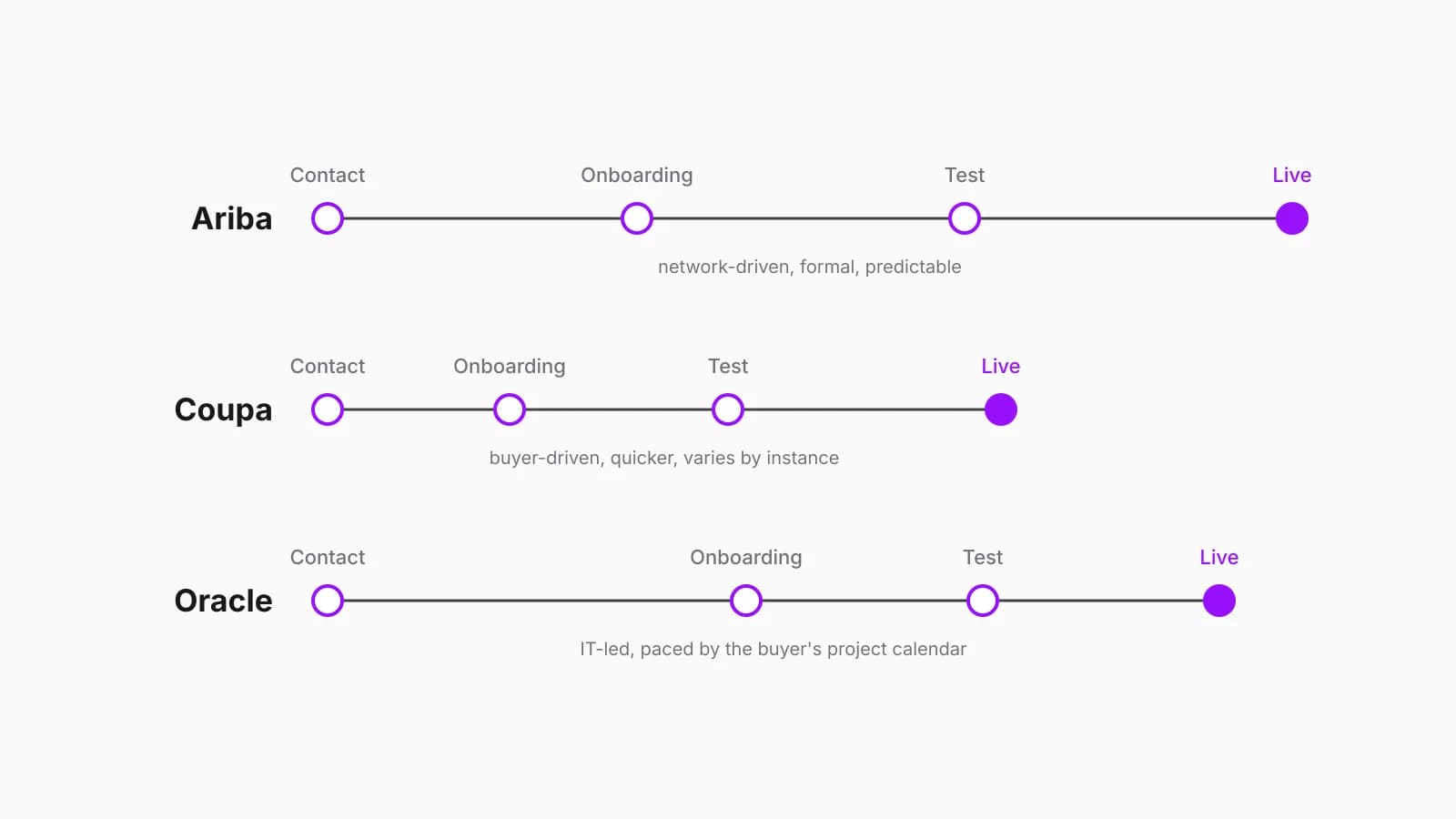
Supplier enablement — the buyer-side process of getting a supplier registered, connected and approved on the procurement platform. The team that runs it is usually your main contact during onboarding. We describe what they will ask in The 10 questions procurement will ask on your first punchout call.
Supplier portal — the website on which a supplier manages its account on a procurement network or platform. Not to be confused with your own website, which is where the punchout session actually happens.
Test environment / sandbox — a copy of the buyer's system, or of yours, used to check the connection before it goes live. Every platform insists on a test phase.
Transparent punchout — a variant where the buyer's staff never see your website at all. Their system fetches results from your catalogue directly and shows them inside the buyer's own screens. Less common, but requested by some larger buyers.
Using the glossary
Most onboarding emails use five or six of these terms, and the same five or six come up on every platform. If you are new to the subject, What is punchout? gives the commercial picture in plain language, and our punchout integration page describes what a supplier needs in place. Beyond that, the right response to an unfamiliar term is to ask the person who used it. Enablement teams explain their own vocabulary all day, and a supplier who asks a clear question is easier to onboard than one who nods along.
Been asked for punchout and drowning in acronyms?
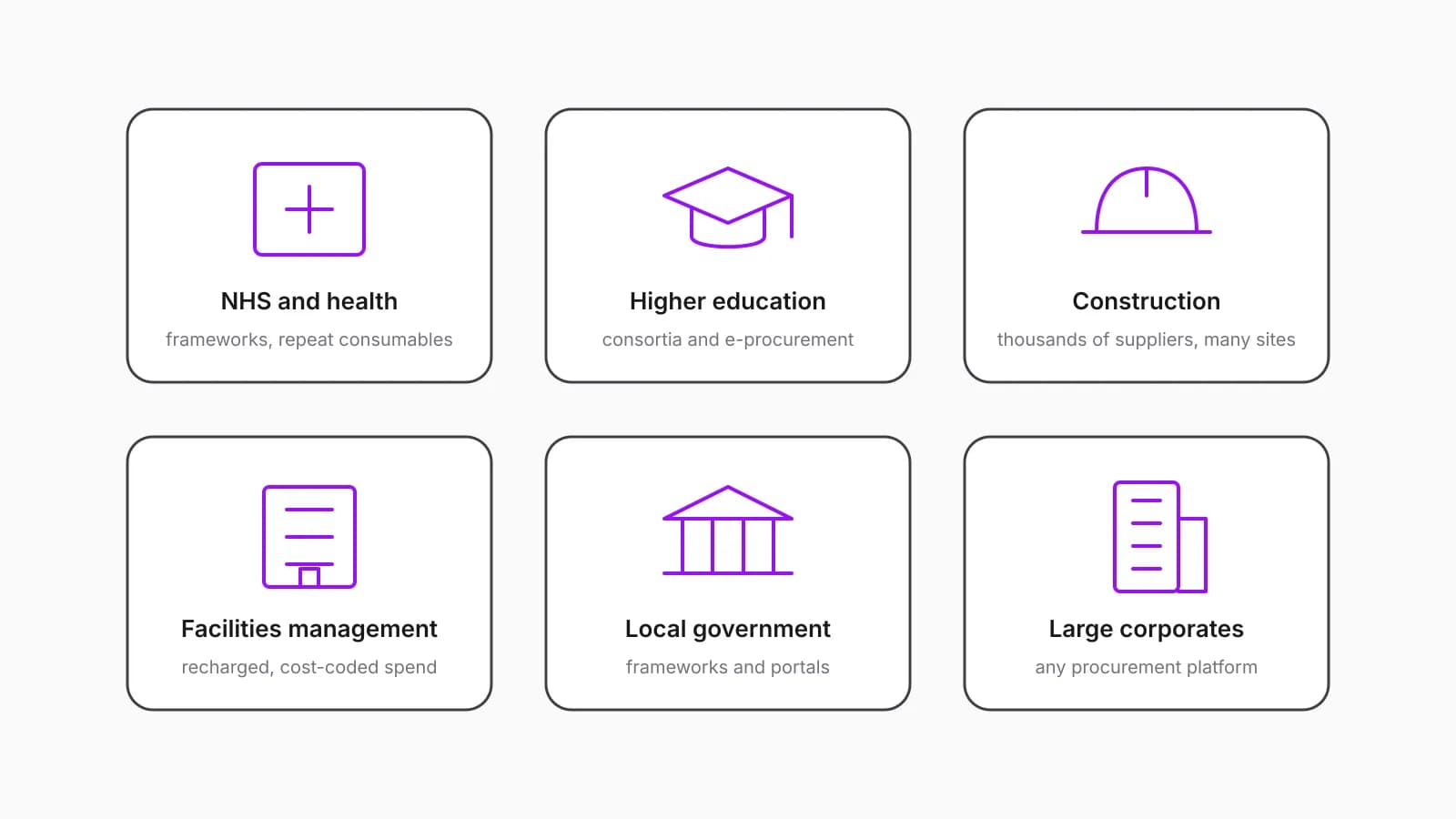
Takeoff Digital connects Magento and Shopify stores to Ariba, Coupa, Oracle and other procurement platforms, and has done it for suppliers across construction, facilities and the public sector. If a customer has just asked you the question, talk to us and we will tell you what it involves for your business.