 Let's Talk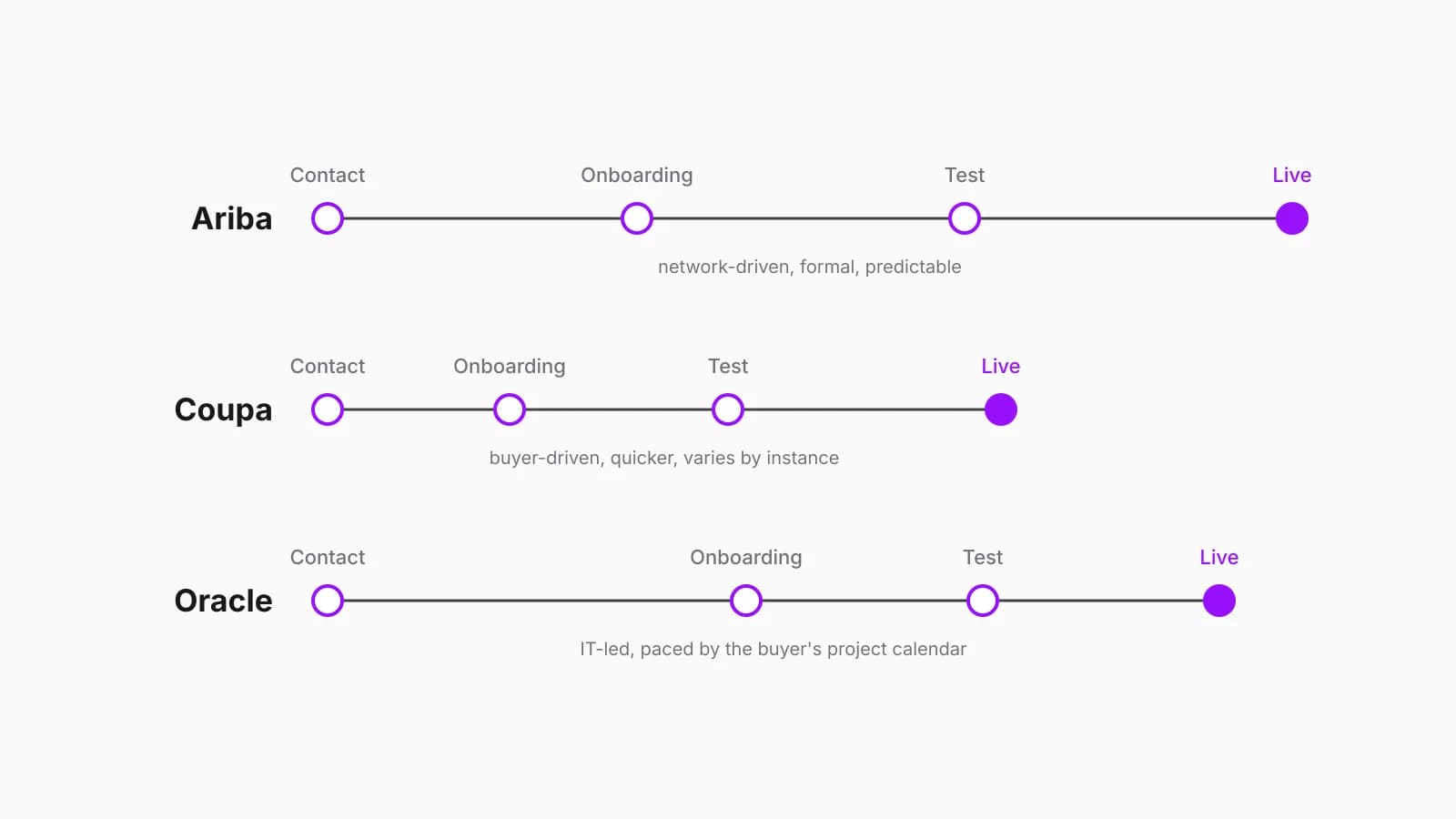
Three of the largest procurement networks a UK supplier is likely to meet are SAP Ariba, Coupa and Oracle. All three support punchout, the connection that lets a buyer shop on your website from inside their own procurement system and bring the basket back as a requisition. All three use the same underlying standard for it. And yet the experience of being onboarded by each is noticeably different.
This article is written from the supplier's chair. It is not about how any of the three works. It is about who contacts you, what they ask for, how the process feels, and what they expect your catalogue to look like when it is done.
Same standard, different people
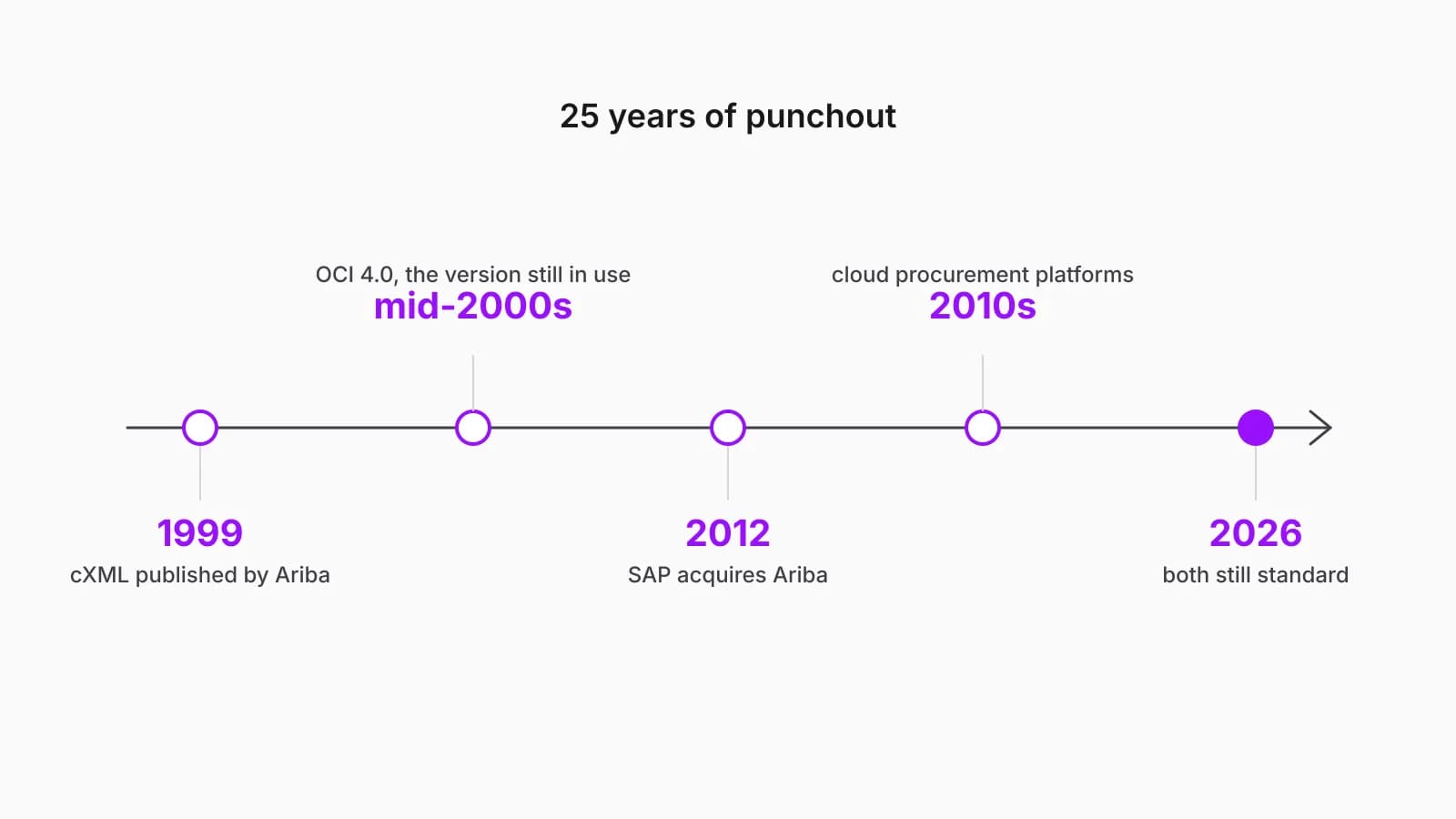
On all three platforms, punchout for a supplier normally runs over cXML, the open standard first published by Ariba in 1999. If you have set up cXML punchout once, the connection to the next platform is a variation on something that exists rather than a fresh start. We cover the standards themselves in cXML vs OCI.
What changes is everything around the standard: the organisation that runs the onboarding, the formality of the process, the test phase, and the catalogue expectations. Those are the things that shape your weeks.
SAP Ariba
Ariba is the most network-centric of the three. Suppliers are onboarded onto SAP Business Network, the current name for what many buyers still call the Ariba Network, and normally end up with a supplier account on it. The process is formal. There is a recognised supplier enablement sequence, often driven by the buyer's enablement team or by SAP itself, with defined stages and sign-offs.
Catalogue expectations are strict. Punchout catalogues on Ariba have to pass validation and be tested in a dedicated test account before they go live, and the buyer will usually want to see the connection working to their satisfaction before it is switched on for staff. Ariba also distinguishes between Level 1 punchout, where staff shop entirely on your site, and Level 2, where they can search your items from inside Ariba and jump to the product. Which one the buyer wants is a conversation to have early.
What it feels like: structured, document-heavy, and predictable once you are inside the process. Our Ariba punchout page covers what we handle on the supplier's behalf.
Coupa
Coupa tends to be more direct. The contact usually comes from the buyer's own Coupa administrator or from a Coupa implementation partner working for them, rather than from a central network team. There is a Coupa Supplier Portal, but a punchout connection is mostly arranged between you and the buyer's team.
The formal process is lighter and typically faster. The trade-off is variation. Each Coupa customer configures their own instance, so two Coupa buyers can have noticeably different expectations about how your catalogue should behave, what fields they want to see on the basket, and how testing is signed off. The second Coupa customer is not automatically the same as the first.
What it feels like: quicker to start, more conversational, and more dependent on the individual buyer. Our Coupa punchout page describes the supplier side.
Oracle
Oracle appears in two forms: Oracle Procurement Cloud and the older iProcurement in Oracle E-Business Suite, and there is also an Oracle Supplier Network through which some buyers manage supplier connections. Oracle is common with large corporates and public bodies that run Oracle as their finance and ERP system, which means the procurement function is usually close to the IT function.
Onboarding is more often driven by the buyer's IT or procurement operations team than by a network. The documentation is enterprise-IT flavoured, and the people you deal with are more likely to be systems analysts than enablement coordinators. Where the Oracle Supplier Network is used, the supplier registers, the buyer approves, the supplier confirms the connection is ready, and the buyer then activates it for their users.
What it feels like: methodical, internal, and paced by the buyer's own project calendar. Our Oracle punchout page covers the supplier side.
What all three have in common
- A test phase. No buyer switches on a supplier connection without checking it first, whatever the platform.
- A go-live sign-off. Someone on the buyer side formally approves the connection for use. Find out who that is.
- A relationship owner. On every platform there is one person who owns your supplier record and can move things along, or let them drift. Identify them in the first week.
- Catalogue governance. Buyers care that staff see the contracted range at the contracted price. How tightly that is policed varies, but it is never ignored.
Which one you will meet first
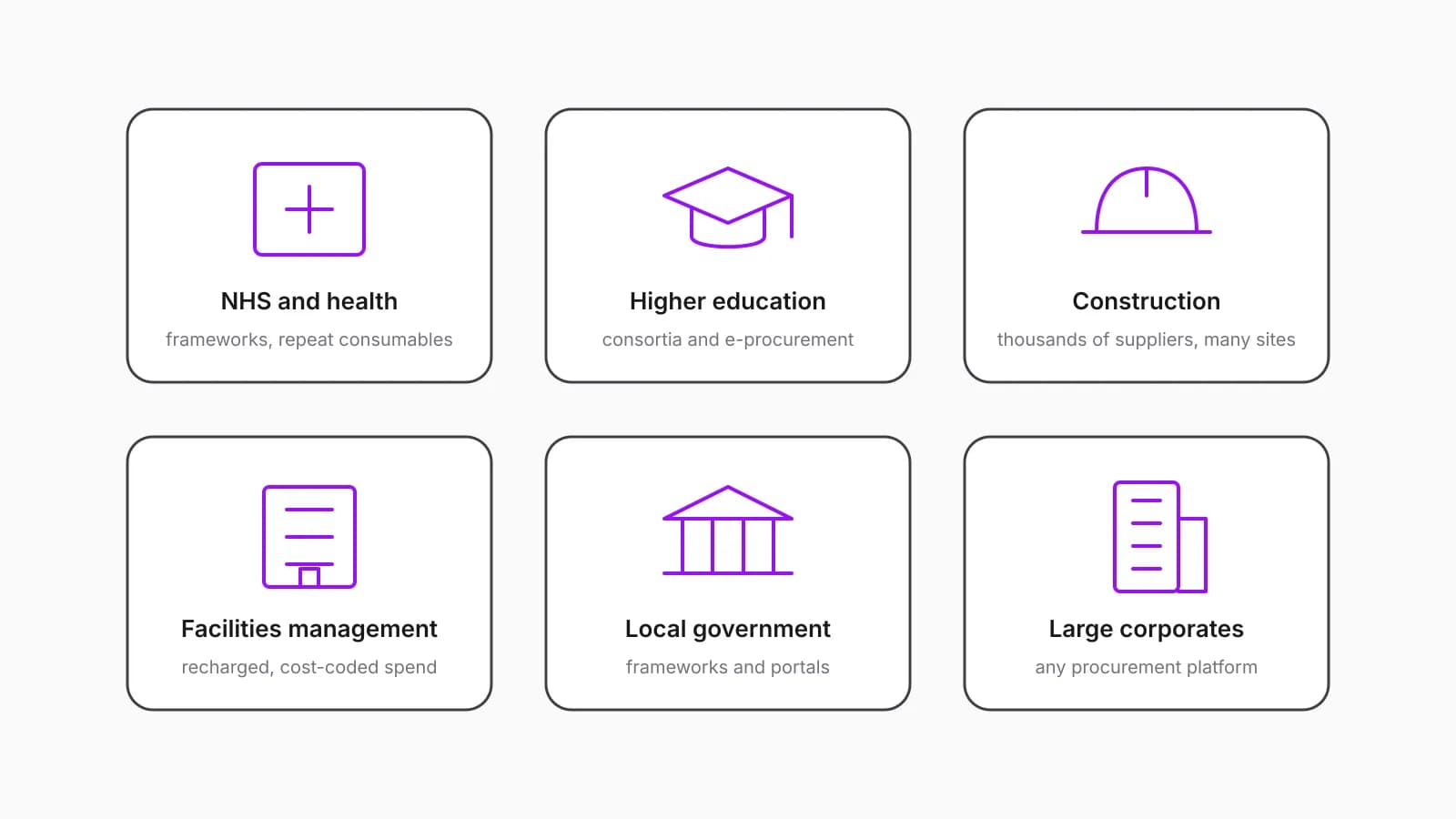
That depends on your sector more than on anything you choose. Large construction and facilities groups lean towards Coupa and Ariba. Corporates and public bodies on Oracle finance tend to use Oracle procurement. Universities and the health sector have their own patterns. We go through this in Who asks for punchout in the UK?, which is the article to read if you are trying to work out whether the question is coming your way.
Whichever platform arrives first, the useful preparation is the same: know which one it is, find the person who owns the relationship, and have a punchout integration partner who has been through that platform's process before.
Been asked for Ariba, Coupa or Oracle punchout?
Takeoff Digital connects Magento and Shopify stores to Ariba, Coupa, Oracle and other procurement platforms, and has done it for suppliers across construction, facilities and the public sector. If a customer has just asked you the question, talk to us and we will tell you what it involves for your business.